1.28.2007

Structural Integrity and You: a quick, dirty and woefully incomplete guide to making educated guesses about building stability.


OK. First, a disclaimer. One that holds for everything here at HtBS,
but holds especially true for this post. I am not an engineer, I am not an
architect. I am an undergraduate student of two social sciences that
are particularly removed from reality: Philosophy and Government Theory. The information below has come to
my personal aid in my personal misadventures (that's me in the pic), but it is not to be taken as authoritative in any fashion. If you have qualms about the structural integrity of a building, stay out of
it!!!
There are people who know a lot more about this than me. This is not meant to encourage any of you to enter potentially dangerous structures. That said, some of you will anyway. Hell, some of you probably already do. And if that's the case, here are a few things about structure that you ought to keep in mind. (Oh, and remember that, on a long enough time line, in the words of Summer at Shatter Creek,
"Structure falls apart, and there's nothing you can do about it." Keep your wits about you.)

So. You want to know about buildings.
All of my experience comes from work in New Orleans, where foundations are just pilings because of the high water table. most of these houses are single story, and the structures are all relatively small. the task at had was to assess whether the houses could be safely gutted, and so it was taken for granted that we could peel off drywall in order to examine the wall studs or ceiling beams. So, as always, Extrapolate at your own risk.

You should equip yourself with (at least): a powerful flashlight, a decent-sized crowbar, and a hardhat.

Before you enter the Building in Question (B in Q for short), walk around it.
First, examine it from a distance. You'll need good eyes for this, and
a fair intuitive sense of geometry. Are it's lines straight? is the
line where the roof beginsparallel to the ground? If the structure has
siding or, for some other reason has lines on it that ought to be
parallel to the ground, are they? If not, or if these lines warp or
curve, this could indicate that the frame of the house is sagging in
particular areas--that for one reason or another the frame or
foundation in a particular section is no longer bearing the weight it's
supposed to. The same is true of cracks in a brick or plaster exterior.
Now some sagging is normal for old houses, and some sagging is purely
superficial (e.g. a brick face that's separated from the frame), but it's a good sign that you'll have to look deeper.

Get closer. Look for obvious problems. Look in the windows. Are there
ceiling beams hanging down? If so, you have a large problem on your
hands. Does the floor look intact? solid enough to walk on? Get up
close to a corner and follow the foundation or the line of pilings with
your eye. Does it warp at any point? If the B in Q is on pilings, are
theyperpendicular to the ground, or do they lean under the weight of
the B in Q? In the case of pilings, get on your knees and look under
the house with that flashlight of yours (told you to bring something
bright). Check to see that the pilings are under major floor beams. If
a few pilings tilt or lean, that's OK. Like I said, any old house is
going to shift and twist a little. But houses where the beams are no
longer on the pilings, or where the piling tilt or foundation warp is
extreme are not safe. If you are not sure, assume the worst. Be smart. These pilings have to bear the weight of the entire structure and distribute it safely to the ground on which they stand. If they don't
look up to the task, stay out! If everything looks acceptable to you, you may decide to enter.

If that hardhat wasn't already on, it's time to put it on. And realize that it's far from comprehensive protection. Now before we proceed, its time for a little informal theory. Now a building, minimalistically speaking, is four walls and a ceiling. Due to the ductile nature of wood, among other things, it doesn't make sense for the ceilings of most good sized houses to be comprised of singular beams running from
the top of one side wall to the top of it's opposite: the wood would sag in the center, and the overall structure would be flimsier. Enter the load-bearing wall, stage right. If one builds a third wall,in between the two side walls, the center of the ceiling beams can rest on this third wall, eliminating the sag and beefing up the structure. Indeed, the ceiling beams can now be made of two shorter pieces of wood (easier to acquire), one running from each side, jointed together with this joint supported by the third, center wall. This wall is known as the load-bearing wall. It is very important that you identify the load bearing wall, for it's integrity is crucial to the integrity of the overall structure. If you are standing on the threshold of the front door of the B in Q, then ceiling beams usually run perpendicular to your line of sight. The load-bearing wall, by its definition, runs perpendicular to the ceiling beams, in order to support them. Locate the direction of the ceiling beams and you can locate the load-bearing wall.

First, though, have a look around. Is the floor solid? If you can walk on it without it creaking or shifting, stomp on it a bit, and see if it still feels solid. Better yet, if that crowbar of yours is of good heft, whack the floor in front of you with a blunt end--better it go through a weak spot than your foot. Once you're sure of your footing, take note of the lines inside
the house. Are the doorframe angles all close to 90*, or do they seem to have shifted? if they've shifted, is there a pattern to the shift (i.e. are they all leaning in similar directions to similar extents) or are there shifts in all directions? The first indicates that the house is leaning, which can be dangerous. The second could indicate that different parts of the structure are leaning in different directions--that is, the structure is coming apart.

If all looks acceptable to you, it's time to have a look at the studs and beams themselves. You can do this by taking a crowbar to the plaster or drywall of the wall/ceiling, and having a little look. Of course, this part is destructive. When I was in New Orleans, we were assessing mold-affected houses to be gutted, and so the drywall/plaster already needed to come down. You may not have this luxury. If you don't, take your best guess at the load-bearing wall (in addition to what was said
before, it usually runs the length of the structure), locate a stud within it by tapping or using some fancy stud-finding device, and give the stud a good kick. If it's solid, and nothing else that you've seen so far makes you worry, chances are the structure is in decent condition. Rest easier, keep the hardhat on for good measure. If you can start tearing at the walls, however, then by all means, do so. Once you've identified the load-bearing wall, tap the ceiling joints with your crowbar. Are they solidly atop the load-bearing wall? Or is the wall misaligned underneath it, no longer supporting the beams at the joint where they meet? such misalignment can be the result of the warping we looked for
earlier. If the joints are not firmly atop the load-bearing wall, that wall is not doing its job, namely bearing the load. Be wary of the B in Q's structural integrity. If the joints are atop the LBW, give a few of its studs a solid tap or a firm kick to see that they're still connected at both ends, top and bottom. Be sure to check more than one spot on the load-bearing wall, as warping and shifting can be localized.

If all checks out up to this point, you can very cautiously say, to your self and in a quiet, non-authoritative voice, that the structure is in halfway decent shape. This, of course, says nothing of its long term durability or scientific soundness. In fact, this doesn't say much of anything at all. But should you find yourself in a building of dubious merit, this should help you know what to keep an eye out for.

How to break your health

Hey all. Apologies for the dry spell... Got very sick after my last trip to New Orleans. It's a motto of ours here at HtBS
that one can only abuse a machine as much as one takes care of it, and
apparently that's true of the human body as well. So, as always, equal
parts safety with your stupidity.

The trip was good, I learned a lot that will make its way here, from a quick-and-dirty set of methods for checking a building's structural integrity (definitely not comprehensive or foolproof) to inventive ways to repair engines with epoxy--all stuff that I can't wait to share. But bare with me as I recuperate.
Keep your tools and wits sharp, and I assure you, in due time, more stuff will be broken.

12.12.2006

How being patient and being smart leaves you with quality products that you neither paid for nor stole.


There's a saying: buy it right, or buy it twice. This is a warning to anybody who thinks that the cheapest option is their best option merely because it's the cheapest; I experienced this with the first fixed-gear wheel that I bought. When I started to abuse the drivetrain a little bit, the threaded interface between the cog and the rear wheel stripped, leaving me with a useless hub.

For people like me, who like nice things but can't afford them, the trend of buying so right that you buy all the way to the top is frustrating to watch, because we can't take part in it. That's why I love Formula hubs so much - an affordable hubset ($70) that spins extremely smooth and is sealed well; and when the weather does break in to the seals and start to wear out the grease, you can pop out the cartridge bearings and pop in some new ones ($10).

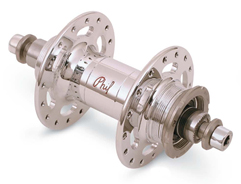
Those that buy right to the top get Phil Wood hubs ($300). Burly and indestructible; a guy I was chatting with in Union Square told me, "I've been messengering on these hubs for seventeen years and haven't even changed the bearings." Plus, they come with the "no matter what happens, if they break or fail or get messed up, we'll replace them" guarantee. A damn good thing, considering the price tag.

But that kind of bling is not my style. So I'm left a little confused now that I'm the owner of a Phil Wood rear hub (solidly laced to a respectable Velocity Aerohead rim). I certainly don't need the quality of a Phil (and I didn't pay for it, dammit! I traded my Formula/Aerohead wheel, and you know what? I and the other both got something we needed out of it!) - it's not going to make me faster.

But the lesson here is that in order to get quality, you're a fool if you buy right up to the top. My Phil Wood is a tad smoother than my Formula was, completely unnoticable when I'm riding with a full bag and chain in winter clothes, but my midlevel Shimano front hub is remarkably smooth for a hub that only requires occasional (once in two years of owning this used wheel!) maintenance of loosening the bearings just a hair.

There's no substitute for knowing an industry and the specifics of its products. You could buy the sweetest thing there is, but chances are, there's something a little quieter waiting in the corners if you're patient - a great trade, or an under-valued component with really impressive seals on their loose-ball bearings. You can buy it right, you can buy it twice, or you can do something in the middle ground and feel really good about it.

12.11.2006

Really quick How to Break Stuff Update. First, I just bought new respirator filters for a fourth New Orleans Trip, and I got a free hardhat for my order. So... what to do with it? We're open to suggestions. Second, the HtBS labs just acquired a relatively tame Nerf gun in preparation for an upcoming piece on nerf gun modification. The shootouts in the recent Zombies vs Humans were so-so, but you guys need some real firepower.
So that's what's up here. Keep sending in questions!

12.10.2006

Cheap ways to Improve your Fuel Economy Part 1


So it's nearing holiday time, and those of us with automobiles are beginning to think about the long drive home. At the very least, it's better than thinking about finals. But, alas, we've been working hard. We've been spending what little money we have on a downward spiral of dates, comfort food and alcohol, neglecting our beloved old car until this, the moment that it delivers us from the trials of campus life to the heartbreak cure of the open road.... right? Is that just me? Anyway, If your car hasn't received any lovin' in a while, chances are the ride home will hurt your wallet. So HtBS presents you with the following ways to improve your car's fuel economy for under $20. These are cheap and easy to do. They require no tools, and next to no knowledge of automobiles. Part 2 will be more fun.


->Don't Drive like Evan: For serious. Gearing varies from car to car on what the highest efficient speed is, but across the board speeds in excess of, say, 75 miles per hour will subject your car to a ton of drag from the air around you. Granted this'll vary depending on a cars shape, but since the vast majority of production cars on the road do not have a smooth underbody or other aerodynamic goodies, expect drag to win. The faster you go, the more dramatic of an effect the drag has. A little bird once told me that a Volvo 850 rated at 25mpg Highway will only get 16mpg at speeds of 100mph. And it's not just your cruising speed that matters--it's how you get there. The higher the RPM you demand of your engine, the more fuel you should expect to burn. cost: free

Some of us, though, will never learn to drive as though our foot is made of a lightweight substance.

->Air Filter: A new air filter will work wonders for fuel economy and is often overlooked on a college student's car. At least once a year, throw a new air filter in your car. Engines, by and large, function like huge air pumps. When you press the "gas" pedal on a Fuel-Injected car, you're actually only letting air into the engine by way of the throttle-body--the car's computer then matches that air with the right amount of fuel. The air filter is meant to keep grit and debris and bugs from entering your cylinders and scratching up (read: destroying) the inside of your engine. As you drive, that filter gets clogged, and the engine gets choked for air. The affects performance, but also efficiency as it becomes harder for the engine computer match the air with the right amount of fuel. New air filters for domestic cars can be bought damn near anywhere that sells car-parts. Some European cars require a trip to the dealer. If neglected for years, this can starve several miles per gallon from your trusty ride, easily. Cost: $10-$20

->Tire Pressure: All of your tires should be filled to the pound-per-square-inch ratings for the particular car. This number can usually be found on a label in a door-well or near the gas cap, or in the little manual that came with your car. More important than the amount of air in the tires is that all of the tires are filled to the same pressure. If you haven't filled your tires since the weather got colder, chances are your tires are under-filled and costing you more fuel. Cost: Free. Or $0.50, now that air is a marketable commodity.

12.07.2006

How to break a big fuckin' truck.

In case you were wondering, Streetsblog is a great source for the Liveable Streets movement. Through them I found this great gem, which is a good way to break the undercarriage of your car by trying to sneak into lanes reserved for mass transportation:

Retractable bollards.

However, if that's enough for you, here is a link to a super-high-tech retractable bollard. I saw that the staff at How To Break Stuff should really look into developing one of these. Then, we can aquire a big truck, and combine the two. A la this amazing video. Sha-zam!

12.06.2006

How to Break my Heart


A recent reader asked us several questions, all of which we will get to in time. The most poignant at the moment, however, was, "How does one break your heart?" Well, Gavin and I discussed this over a somber meal at Illiano's last night.
One can break my heart in one of two ways:

1) Quoting Camus while wearing a chastity belt, or

2) Runing into a Mazda Miata with a Bulldozer.

12.04.2006

How to keep your Bike safe in winter (so that you can endanger it on ice).


When Gizmo asked me to write an entry for this new blog, How To Break Stuff, I thought, finally! I've been breaking stuff for years! However, two new hobbies are riding bikes really hard, and fixing stuff (though I've done a fair share of breaking stuff in my attempts to fix it).

Given this combination, here's a quick how-to and list of resources for winterizing your bike, rated by number of dollar signs, which is roughly how expensive it will be to do or to buy material for.

$$$
- If you've got a steel frame, a good investment is a treatment with JP Weigle's Framesaver. Take your bike to a bike shop. They'll strip it down and spray this stuff inside it, completely coating the innards of the frame tubes. It will offer very good protection against rust. If you've got an aluminum frame, this is of no concern for you – aluminum does oxidize, but it forms its own protective layer, whereas steel just rusts. How do you tell what material your bike is made of? Well, steel frames usually have round tubes, and aluminum frames will have oval or funny-shaped tubes, which are large compared to steel tubes. Look on the seattube (the part of the frame triangle that the seatpost sticks in to) – there's probably a tubing sticker, and if it says "chromo" or "chromoly" then you've got a steel frame. This might cost you $50.

$$ - clean and lube everything you've got. Bike shops sell chain cleaners, which are little devices that you fill with degreaser (Simple Green is a good, cheap one) and run the chain through a few times - or, you can just do your best with a spray bottle, a rag, and a toothbrush. Remove ALL the existing lubricant (a very good thing. Crud and sand and grit sticks to the lube and has the effect of sandpaper on your chain, gears, and derailleurs, which will reduce your efficiency and wear them down, causing shifting problems). So, clean your chain and all your cogs and chainrings, let them dry, and then apply a new coat of lubricant (do not forget this step). I recommend Rock N Roll Gold, which is super, but any thick lubricant will do you well, especially wax-based lubricant. This might cost you $20 or a bit more, for supplies.

$ - grease everything on your bike. Phil Wood makes the best grease out there, but I also like Slick Honey. Anyway, here's what grease does – it forms a watertight seal between two pieces of metal. It prevents them from corroding to each other. It prevents rust. It also lets you tighten screws or bolts to the appropriate point (it's counterintuitive, but true). So, arm yourself with a set of allen keys, and take your bike apart, clean all screw/bolt threads, and regrease them. Pay attention to: the bolts for your stem and handlebars, and your seattube (this should be greased thoroughly – a major source of frame damage is getting a seatpost seized in the seattube!). $10 for grease, more for tools.

$$ - it's also a good idea to overhaul your hub bearings, bottom bracket, and headset, but this requires some special tools, special know-how, and some experience. Basically: any time you have moving parts on a bike, friction is reduced by a set of ballbearings between the moving part and the non-moving part. It's tough to overhaul these, because you have to re-set the tightness so that it's not lose at all, but not so tight that it reduces the efficiency. Some parts have disposable/replaceable "cartridge bearings" that you just pop out and pop a new set in. $10 for grease, and definitely more for some more specialized tools.

$$$ - While www.sheldonbrown.com and www.parktool.com/repair both have some helpful advice for some more advanced work, this should be part of any bike shop's tune-up/overhaul. If you take your bike to a shop for an overhaul (which will also include tuning your brakes and derailleurs), make sure to check to see if they'll do this. Cartridge bearings are usually well-sealed and don't need to be replaced, but loose-ball bearings should be cleaned and re-packed with new grease. Usually $60-80 for a shop overhaul.

(no money) – clean your bike! Clean it after you ride it, after you get it wet, and especially after you ride in the snow, because you'll pick up a lot of salt. Why is this bad? Remember that chemistry experiment in high school that you missed cause you got stoned in the bathroom? No? Go figure. Anyway, water plus salt plus steel (remember the quick lesson about steel up above?) = RUST, which weakens your frame and your parts. Furthermore, sand plus drivetrain (chain, cogs, derailleurs) = a noisy, poorly operational power/shifting system.

After your sloppy winter ride, wipe the whole thing down. Get all the wetness off of it. Make sure to wipe down the chain and to try to get any crud out of the gears. Take out your seatpost and clean it – lots of grit gets in here, so be sure to regrease it! In fact, many people overhaul their bike after each messy ride. It helps in eliminating the squeaks, moans, groans, and other awful sounds that result from a dry, rusting bike.

(no money) – store your bike inside! The weather is bad for the bike and there are lots of indoor, space-saving options. Just do an internet search for bike hanger.

This is all really do-able. Once you take the power of fixing and maintaining your ride in to your own hands, there's nothing stopping you from getting where you want, when you want. But, you ask, why not just put the bike away for the winter? Because, I respond mischievously, because you know that long night when it first snows and everybody is outside? Yes? Because that's a terribly fun night to ride your bike.

Understanding Respirators (or: clean air, explained from a New Jersey perspective)


in a post on Wesleyan's Anonymous Confession Board, people started talking about protective equipment and respirators (with regard to spraypaint and enclosed spaces) and people started asking about the filter rating system. so. here's what I know.

filters are rated with a letter then a number, like P100 or N95. the number represents the tightness of the weave, so to speak. i.e., the higher the number, the smaller the particles it captures. the N and the P designate whether or not oil based aerosols can get through the filter. N does *not* block them, P does.
So. Hospitals carry a lot of N95's, because an N95 is sufficient to block the transfer of certian microbes, e.g. Tuberculosis. But a P100 will also block these. For asbestos, for another example, you want a 100 rating.
I rock a P100 because, why not? They're a little more expensive, but it's worth it because the protection is more comprehensive.

But that rating system only covers the filter element itself. There are also pre- and post- filter elements that come into play. The filters I use most often are called GME-P100. No idea why the GME nomenclature, but in addition to a p100, it has a layer of activated charcoal. The kind of stuff they give you if you swallow poison or OD--activated charcoal can neutralize a lot of organic toxins (wikipedia it, it's cool stuff). In a respirator filter, this is most often marketed to petroleum refinery workers and the like--people exposed to toxic hydrocarbon vapors. They also prevent smells from getting through (which was a fucking god-sent in NOLA).
In non industrial conditions, you can probably rock a filter for a few weeks of use before you have to retire them. Filters are replaceable, so, my respirator from all of my New Orleans work is not toxic, just needs new filters.

FIT IS THE MOST IMPORTANT PART OF A RESPIRATOR. make sure that if you cover the air-intake-holes, you're unable to breathe. otherwise you have a leak.
3M makes a nice cheap series of respirators. I have a thin face, so the 3M's don't fit. I have a slightly more expensive but worlds more comfortable respirator made by MSA, and it's probably saved my life, or at least my lungs. It's also a fashionable shade of blue.
If you're interested in buying a respirator, ProfessionalEquipment.com sometimes has decent deals. Hardware stores also carry them on occasion, though usually only one brand/type.

When do you need a respirator?
if you go into the Wesleyan maintenance tunnels, you should have a p100. some but not all of that tunnel system has a lot of asbestos. If you're doing a lot of spray painting in an enclosed area, rock a pXX. If you're using solvents and the like in an enclosed area, err on the safe side and get some activated charcoal P-somethings. You should also wear one when soldering, especially if using lead-based solder.
Seriously. I do stupid shit all the time. I should know.

Love and Tinkering

Hello, and welcome to How to Break Stuff. A recent bout of introspection vis a vis my involvement in several blog communities centered around Wesleyan University has shown me that I am a hopelessly geeky n'er-do-well. Many of my posts to Wesleyan's Anonymous Confession Board and Wesleying have involved how-to's on nerf-gun-modification, choosing the right respirator for various tasks, and other little things of that nature. In the spirit of blogs like Hack a Day, HtBS will offer various bits of tinkering and advice. But also, in the spirit of the Wesleyan communities, ridiculousness. Don't take us too seriously. Take us just seriously enough. In addition to things that might actually be useful, expect features like Drunk Project of the Week, the Social Science Major Power-tool Review, and How serious were those warning labels?
Sometimes we know what we're talking about. If you have a question about Love or Tinkering (we're also equally adept at interpersonal relationships) send us an email at howtobreakstuff@gmail.com, and we'll reply with a post or something witty, useful or both.
Gavin and I have broken a fair amount of shit in our day. We know what's up.

-Evan Simko-Bednarski